

Fair trade:
How is it defined?
Definition: Fair trade is a trading partnership based on dialogue, transparency and mutual respect, whose goal is to achieve greater equity in world trade. This type of marketing contributes to sustainable development by offering better trading conditions and guaranteeing rights for disadvantaged producers in the countries of the South. The concept is based on 3 principles
- Economy: business is a partnership, not charity
- Social: respect for workers, not exploitation
- Environment: respect for nature, promoting organic farming.
More than 15 European countries consume products whose manufacture is not checked by human exploitation. Fair trade supports 1.5 million farmers in 60 countries in Africa, Asia, Latin America.
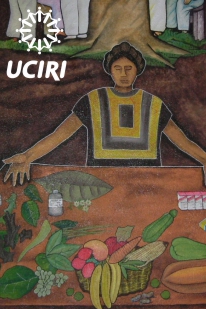
More than 330 growers organizations in 18 countries benefit from Fairtrade. Among them is the Union of Indigenous Communities of the Isthmus Region (UCIRI) of Mexico.His story, like many other Mexican organizations, shows how fair trade helps small farmers to break the cycle of dependency and exploitation that is so common in conventional coffee trade.
For more information visit: www.comerciojusto.com.mx
History:
From the 50's are the first fair trade initiatives by religious influences. What we argue is the respect of man and fight for his dignity and against poverty. So they began to sell products from poor countries U.S. and Europe. (Examples)
U.S. 1946: Ten Thousand Villages
1948 Universal Declaration of Human Rights: Art 23 § 3 "Everyone who works has the right to just and favorable remuneration, ensuring for himself and his family an existence worthy of human dignity, and supplemented, if necessary , by other means of social protection. "
1950 England: Oxfam
1973: arrival of Father Frans VanderHoff in Mexico
Seventies: The current third world
South smallholders organized in the North promoted the idea of creating an alternative market wider, placing products in stores organizations. The third world countries want desarollarse without being exploited.
In 1964 during her United Nations Conference on Trade and Development (UNCTAD) came the slogan "Trade, not aid" that is "trade, not charity." Indeed work in the fair trade system is not giving money to small farmers with limited resources, but give incentives to negotiate directly with consumers and with the least possible number of intermediaries.
1967 creation of the first fair trade organization in the Netherlands "Fairtrade Organisation"
Thus was born in 1989 in the Netherlands the first initiative of a certification body for Fair Trade, with the Max Havelaar label. This came together between the indigenous cooperative of organic coffee UCIRI of Mexico and the Solidarity Foundation in the Netherlands. Boersma VanderHoff Francisco in Mexico and the Netherlands Nico Roozen coordinated the emergence of the first fair trade market with products known for seal products promoter organized small producers in the market, ensuring access and fair prices to producers. Initially launched the seal of approval in the Netherlands and now exists in 21 countries on three continents, including Mexico. At the same time organizations were created TransFair Fair Trade in Germany and in England.
In the late eighties, then came a third stream animated by the movement of sustainable development. In 1987 the Bruntland report first speaks of "sustainable development" is defined as development that meets present needs without compromising the needs of future generations. Hence came the idea of bringing fair trade to the conventional system, selling fair trade products in supermarkets.
1988: Max Havelaar began selling products in super markets in the Netherlands.
1989: creation of IFAT: International Federation of Fair Trade
1997: Max Havelaar, Transfair and FLO Fairtrade join